
 0
0



PRODUCTS
- Home
- Products
- Precision Machining Parts
- Industrial-Grade Precision Power Transmission & Gear Components Series


Precision Machining Parts
Industrial-Grade Precision Power Transmission & Gear Components Series
- Features
- Primary Machining Processes
- Gear Hobbing & Shaping:
- The core manufacturing processes for preliminary gear tooth generation.
- Precision Gear Grinding:
- The crucial step for achieving high-precision grades. By utilizing precision gear grinding machines, we eliminate post-heat-treatment distortion and ensure a highly accurate involute profile.
- Heat Treatment:
- Typically involves carburizing and quenching or nitriding. This process equips the gear surface with ultra-high hardness (HRC 58-62) for superior wear resistance, while maintaining core toughness for excellent impact resistance.
Description
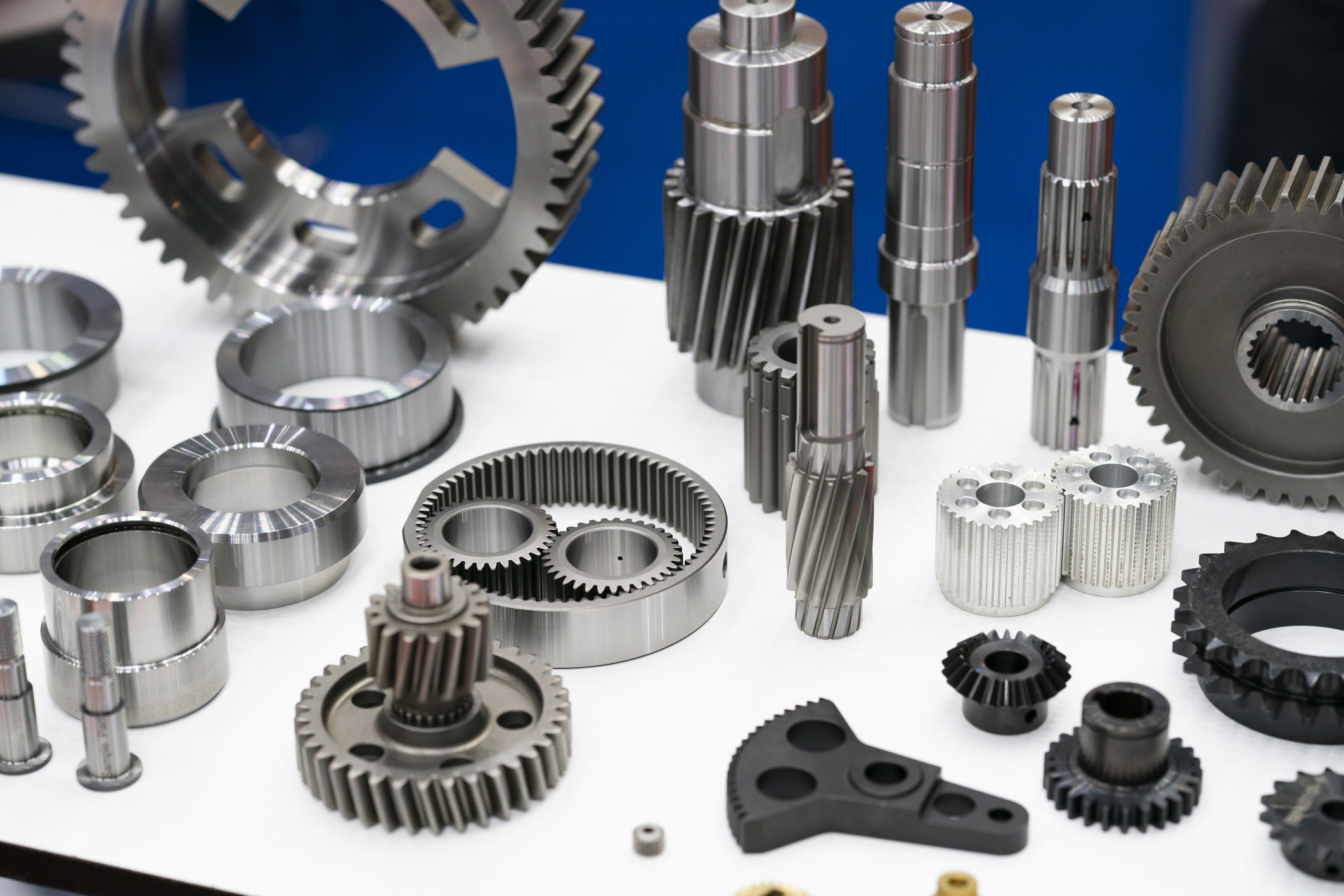
Component Configurations and Categories Our advanced gear machining technologies primarily include the following: Helical & Spur Gears: Responsible for power transmission between parallel shafts. Helical gears (with angled teeth) provide smoother and quieter operation, making them ideal for high-speed environments. Planetary Gear Sets: Featuring a combination of internal ring gears and planetary pinions (as seen in the center of the image), these are widely used in gearboxes requiring high reduction ratios and high torque density. Splined Shafts: Shaft components engineered with longitudinal grooves, designed to securely transmit torque while allowing for precise sliding engagement. Bevel Gears: Utilized for directional power transmission between intersecting shafts, typically operating at a 90-degree angle.
Product Technical Advantages Low Noise & Low Vibration:
We utilize precision gear grinding and profile modification (micro-geometry corrections) to ensure exceptional smoothness during gear meshing.
High Transmission Efficiency: The precise tooth profile design significantly reduces friction loss, consistently achieving a mechanical efficiency of over 98%.
Long Lifespan & High Reliability: Superior material stability and optimal hardness distribution ensure the components resist tooth breakage and surface pitting, even under extreme load conditions.
We utilize precision gear grinding and profile modification (micro-geometry corrections) to ensure exceptional smoothness during gear meshing.
High Transmission Efficiency: The precise tooth profile design significantly reduces friction loss, consistently achieving a mechanical efficiency of over 98%.
Long Lifespan & High Reliability: Superior material stability and optimal hardness distribution ensure the components resist tooth breakage and surface pitting, even under extreme load conditions.