
 0
0



- Home
- Products
- Precision Machining Parts
- Industrial-Grade Precision Custom Fastener Series


Precision Machining Parts
Industrial-Grade Precision Custom Fastener Series
- Features
- Machining Processes
- Forming Technology: Cold Forging or Hot Forging is utilized to ensure continuous metal grain flow, significantly enhancing the tensile strength of the fasteners.
- Thread Machining: We employ precision thread rolling instead of cutting. This process induces compressive residual stress on the thread surface, remarkably improving fatigue resistance.
- Secondary Machining: Secondary CNC turning and milling operations are performed for specific head geometries or ultra-tight tolerance requirements.
Description
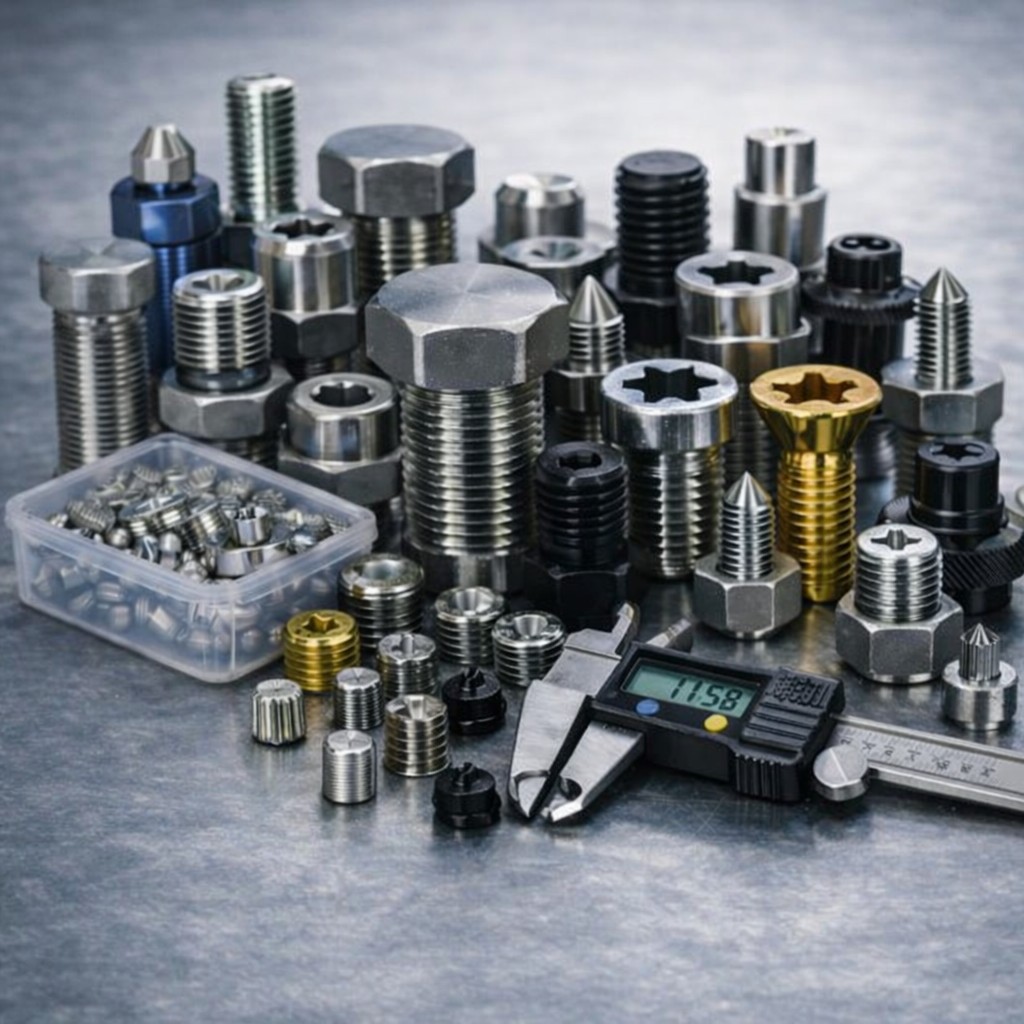
Product Diversity & Features We offer highly customizable capabilities (Custom Fasteners), including: High-Torque Drive Systems: Features various Torx and Hex socket head designs aimed at providing superior torque transmission and preventing tool cam-out during installation. Specialized Point Designs: Certain bolts feature tapered or dog point structures, facilitating rapid self-location and seamless integration into automated assembly lines. Diverse Surface Treatments: Options include plain stainless steel, gold-colored coatings (e.g., Titanium Nitride / TiN for increased hardness and wear resistance), Black Oxide, and Electroless Nickel Plating. Micro Fasteners: Miniature screws specifically designed for the assembly of precision instruments and electronic devices.
Product Technical Advantages
-
Ultimate Fatigue Resistance: An optimized thread root radius (R-angle) design minimizes stress concentration, extending component lifespan in high-vibration environments.
-
High Environmental Adaptability: Flexible material selection based on application requirements, including highly corrosion-resistant materials (e.g., A4-80 stainless steel) or high-temperature alloys.
-
Assembly Efficiency: Precise geometric dimensions guarantee exceptionally low jamming rates when fed into automated sorting and assembly lines.
Application Fields
-
Energy Industry: Wind turbine assemblies and gas turbine structural components.
-
Transportation: High-speed rail carriage connections, automotive engines, and chassis systems.
-
Automation Equipment: Industrial robot joints and semiconductor vacuum chamber fasteners.
-
Precision Instruments: Internal fixation components for medical diagnostic equipment.