
 0
0



- Home
- Blog
- Technical Articles
- Smart Automation Insights
Smart Automation Insights
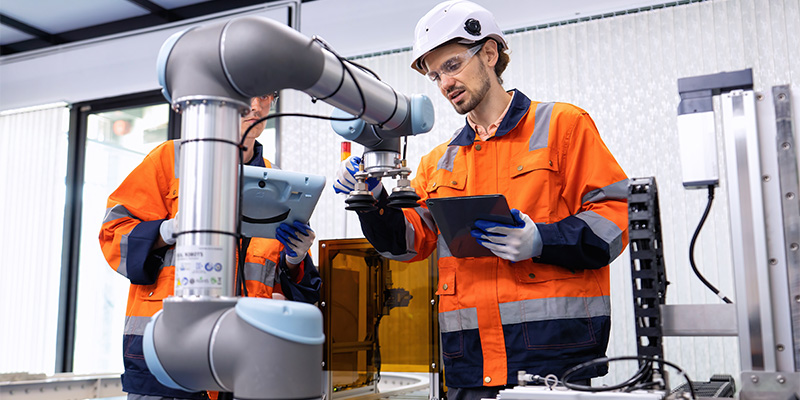
As the global manufacturing industry continues to accelerate digital transformation, “smart automation” has evolved from simple equipment upgrades into a core strategy for optimizing entire production systems. Through robotics, sensor integration, AI computing, and real-time data analytics, automation not only improves production efficiency but also deeply impacts product quality, process stability, and corporate competitiveness. This article explores four key features to explain how smart automation is transforming modern manufacturing operations.
1. High Precision and Stability
One of the core values of smart automation systems is their extremely high precision and long-term operational stability. With high-resolution sensors, servo control systems, and real-time feedback mechanisms, equipment can achieve precision within micron or even nanometer-level tolerances.
Compared to manual operations, automated systems are not affected by fatigue or emotions, enabling consistent output quality during continuous production. This is especially critical for industries such as semiconductor manufacturing, precision metal processing, and medical components. In addition, calibration algorithms and error compensation mechanisms continuously optimize system accuracy, ensuring stable and reliable production processes.
2. Maximization of Production Efficiency
Automation technology reshapes traditional production workflows by enabling high levels of integration and synchronized operations across processes. With conveyor systems, robotic arms, and intelligent scheduling control, enterprises can achieve 24/7 uninterrupted production, significantly reducing lead time from raw materials to finished products.
Moreover, intelligent scheduling dynamically adjusts based on order demand, equipment status, and production load, preventing bottlenecks and resource waste. This flexible production model not only increases overall efficiency but also enhances responsiveness to market changes and strengthens delivery competitiveness.
3. Reduced Labor Costs and Risks
In traditional manufacturing environments, repetitive, labor-intensive, and hazardous tasks rely heavily on human workers, leading to high costs and safety risks. By introducing automation systems, operations such as material handling, welding, assembly, and inspection can be effectively replaced.
This reduces dependence on labor markets and minimizes the impact of workforce fluctuations while significantly lowering the risk of workplace accidents and operational errors. At the same time, human resources can be redirected toward higher-value tasks such as process optimization, equipment maintenance, and data analysis, improving overall organizational efficiency.
4. Intelligent Data Integration and Analytics
Modern automation systems are no longer just mechanical control systems but smart platforms integrated with IoT and AI analytics. Equipment collects multidimensional data such as temperature, pressure, vibration, and yield in real time, which is analyzed through cloud or edge computing.
This enables predictive maintenance, allowing early detection of anomalies and preventing unexpected downtime. Data analytics also helps optimize process parameters, improving yield and resource efficiency, shifting decision-making from experience-based to data-driven approaches.
Smart automation is no longer just a tool for efficiency improvement but a core engine driving industrial transformation. With advancements in AI, machine learning, and edge computing, future automation systems will gain greater autonomous decision-making capabilities, evolving from execution systems into the central intelligence of smart manufacturing. Companies that adopt smart automation early will gain a stronger competitive advantage in the global market.
Related Product: Automation Components


MACRO FOREST
We focus on semiconductor equipment, precision metal processing, and automation components, sharing industry technologies, manufacturing trends, and real-world applications in a simple and easy-to-understand way.


Article Classification
Recent Articles
- Comprehensive Guide to Lathes in Metalworking Factories: CNC, Turn-Mill, and Swiss-Type Machining
- [Complete Guide to Metal Surface Treatment] Guide to Selecting 4 Major Processing Techniques, Characteristics, and Applications
- Smart Automation Insights
- Driving Manufacturing Upgrades Through Smart Automation