
 0
0



BLOG
- Home
- Blog
- Technical Articles
- [Complete Guide to Metal Surface Treatment] Guide to Selecting 4 Major Processing Techniques, Characteristics, and Applications
[Complete Guide to Metal Surface Treatment] Guide to Selecting 4 Major Processing Techniques, Characteristics, and Applications
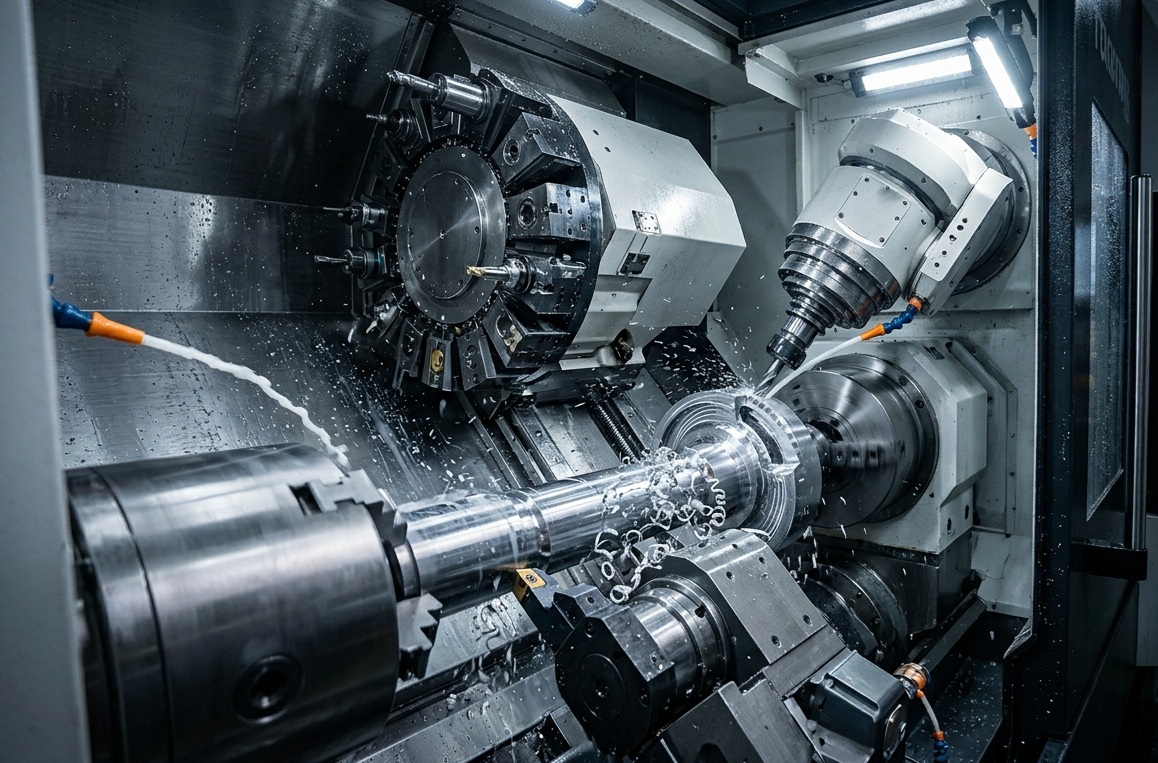
In the field of metal hardware processing, "surface treatment" is a key step that determines a product's rust resistance, wear resistance, service life, and appearance quality. Different metal materials (such as aluminum alloy, stainless steel, iron parts) and their usage environments require specific surface treatment processes.
This article will systematically analyze the four core categories of metal surface processing and 12 mainstream processes, helping you accurately evaluate the most suitable processing solution!
This article will systematically analyze the four core categories of metal surface processing and 12 mainstream processes, helping you accurately evaluate the most suitable processing solution!
1. Electroplating and chemical treatment (to enhance corrosion resistance and hardness)
Through electrochemical reactions or chemical deposition, a protective layer is formed on the metal surface, which is the most common rust prevention and beautification method for industrial parts.- Anodizing: Specifically designed for aluminum alloys. By using electrolysis to form a uniform and dense oxide film on the aluminum surface, it greatly enhances wear resistance and corrosion resistance, and can be dyed in multiple colors (commonly used in 3C housings and bicycle accessories).
- Electroplating: including galvanizing, nickel plating, chrome plating, etc. By applying an external current, metal ions are deposited onto the surface of the workpiece, effectively preventing rust in the substrate while providing excellent metallic luster and surface hardness.
- Electroless Nickel Plating (ENP): Reacts without electricity. Its advantage lies in its ability to evenly cover complex geometries and internal hole workpieces, providing extremely high flatness for rust prevention and high hardness and wear resistance.
2. Coating Treatment (Strong Adhesion and Diverse Appearances)
Coating technology allows metals to offer a rich range of colors and coat them with protective layers with special physical properties.- Powder Coating: Uses electrostatic adsorption to adhere to powder, then bakes and cures it at high temperature. The paint film coating is thick, impact-resistant, and rust-resistant, widely used in mechanical casings, architectural sheet metal, and outdoor equipment.
- Liquid Spraying: Traditional spray painting technology offers highly flexible color mixing, enabling matte finishes, leather textures, metallic paints, and other special textures and highly detailed appearance requirements.
- Teflon Coating: Utilizes the properties of PTFE to give metals special properties such as non-stick properties, low friction coefficient, high-temperature resistance, and chemical corrosion resistance. It is commonly used in food machinery and heating molds.
3. Mechanical Surface Treatment (Physical Improvement of Roughness and Texture)
By striking or rubbing with mechanical abrasives, the microstructure and texture of metal surfaces are altered, commonly used for pretreatment or texture finishing.- Sandblasting: High-pressure air sprays fine sand or glass beads against the surface, removing knife marks and oxide films, creating a uniform and elegant matte finish.
- Brushing (Hairline / Satin Finish): Brushing fine, regular parallel or hairline lines by grinding effectively covers tiny scratches, greatly enhancing the texture of stainless steel and aluminum alloy products.
- 拋光(Polishing):利用拋光輪與拋光膏將表面推至光滑如鏡(鏡面處理),顯著降低表面粗糙度(Ra 值)。
- Vibratory Finishing: Place the workpiece and grinding stone in a vibratory groove for batch operation, mainly used for large-scale deburring, chamfering, and deglossing.
4. Heat Treatment and Formation of Films (Structural Reinforcement and Primer Protection)
Changing the metallographic structure or forming a protective film focuses on enhancing mechanical strength or serving as a coating primer.- Carburizing / Induction Hardening: This heat treatment process enables workpieces to achieve the characteristics of 'the outside, tough on the inside,' with extremely wear-resistant surfaces and high core toughness. They are core processes for gears, drive shafts, and mandrels.
- Black Oxide: Forms a black ferric oxide film on the surface of ferrous metals. Its advantage is that it does not increase the thickness of the workpiece at all, making it suitable for rust prevention in high-precision fittings.
MACRO FOREST
We focus on semiconductor equipment, precision metal processing, and automation components, sharing industry technologies, manufacturing trends, and real-world applications in a simple and easy-to-understand way.


Article Classification
Recent Articles
- Comprehensive Guide to Lathes in Metalworking Factories: CNC, Turn-Mill, and Swiss-Type Machining
- [Complete Guide to Metal Surface Treatment] Guide to Selecting 4 Major Processing Techniques, Characteristics, and Applications
- Smart Automation Insights
- Driving Manufacturing Upgrades Through Smart Automation